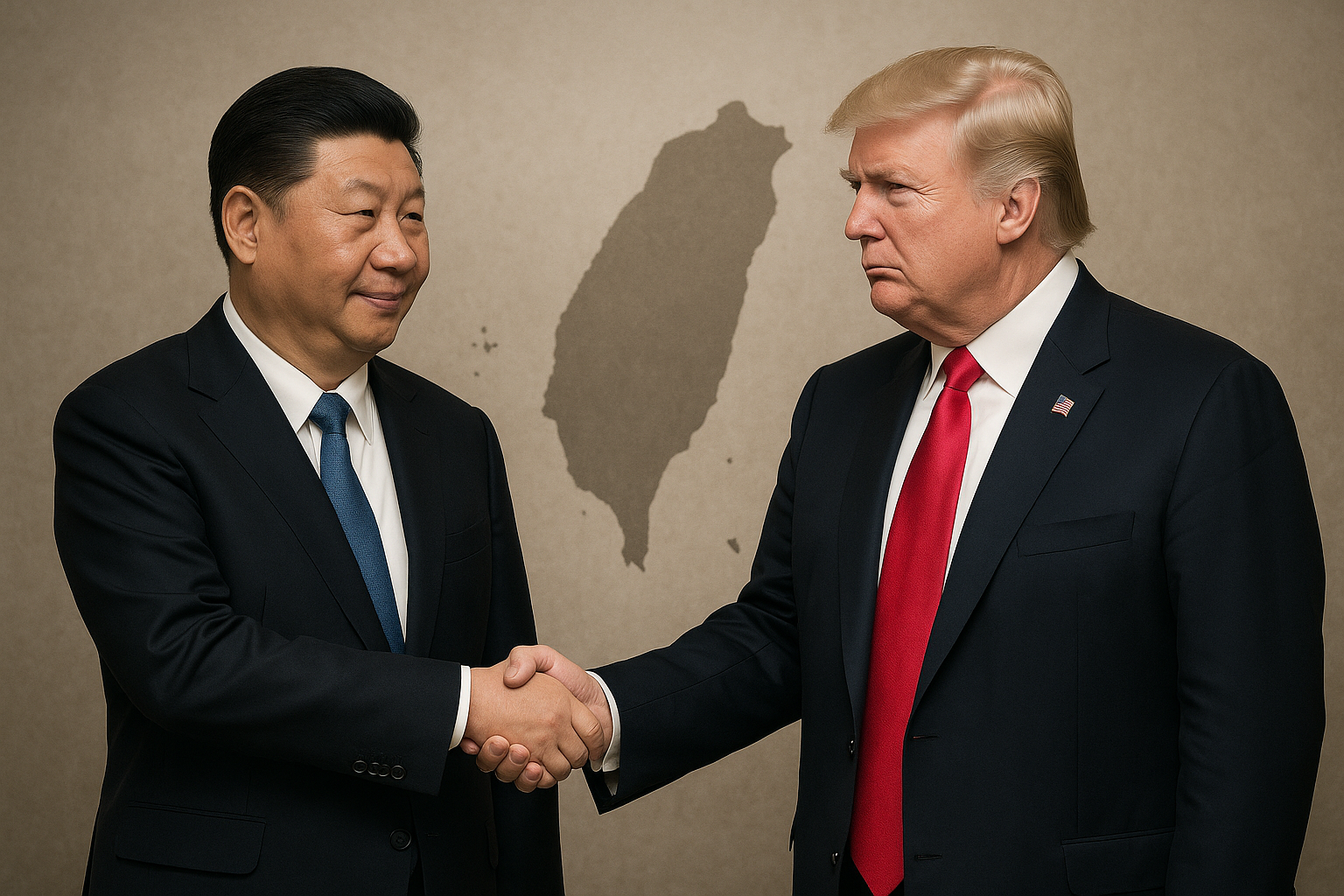
When Donald Trump met Xi Jinping this October, he believed he was making history again. The self-styled dealmaker had flown into South Korea proclaiming a new chapter in U.S China relations, a “peace breakthrough,” and the rebirth of what he called “mutual respect.” But beneath the optics of smiles, handshakes, and the performative grandeur, something else was unfolding something more subtle, and far more strategic. Xi Jinping wasn’t just managing a meeting. He was managing Trump himself.
In public, Xi showered Trump with compliments, calling him a “peace-making president,” a man who “cares deeply about world stability.” During their discussions, Xi repeatedly used language that appealed to Trump’s ego. “You care a lot about world peace,” he told him. “You are very enthusiastic about settling various regional hotspot issues. I always say China and the U.S. should be partners and friends this is what history taught us and reality demands.” On the surface, it was diplomatic courtesy. But beneath it, Xi was framing a narrative designed to shape Trump’s sense of self: not as a warrior, not as a strategist but as a bringer of peace.
For Xi, that framing serves a purpose. If China ever moves militarily on Taiwan a scenario many analysts believe will come within Trump’s term Beijing would prefer a White House reluctant to engage in direct confrontation. A U.S. president invested in his “peace” image is one who hesitates, negotiates, delays. Xi understands this perfectly. He doesn’t need to defeat Trump on the battlefield; he only needs to win in his mind.
The irony is that Trump, ever craving validation, is the easiest mark for such psychological maneuvering. His presidency is defined not by consistent policy but by impulses and tantrums. When he doesn’t get his way, he erupts a big baby in a business suit, governed by grievance and pride. Just weeks before the Xi meeting, Trump threatened to slap 100 percent tariffs on all Chinese imports, sending markets reeling. Within days he reversed course, then bragged that his threat had “brought China to the table.” The Washington Post called it “economic brinkmanship driven by ego, not strategy.” And when Canada ran an advert mocking his tariffs, Trump abruptly terminated all trade talks with Ottawa, declaring the insult intolerable. The Guardian reported that he “pulled out” of negotiations entirely because he “was offended by the tone.”
This pattern repeats endlessly. Trump lashes out, breaks things, and then rushes to claim victory when someone flatters him. It’s emotional diplomacy volatile, theatrical, and entirely predictable. Xi, a disciplined operator, reads this perfectly. By presenting himself as the calm statesman seeking harmony, he makes Trump look like the disruptor desperate for approval. That’s the first step in control: get your opponent to want your praise.
Their October meeting, hailed by Trump as “outstanding,” yielded little of substance. The two leaders announced a “framework” for tariffs and trade, including vague pledges of soybean purchases and delayed rare-earth export restrictions. But the details were thin. As The Guardian noted, “One issue that appeared to be unresolved was the status of the ‘phase one’ trade deal that was agreed in Trump’s first term.” The summit ended with what Xi called a “basic consensus” diplomatic language for nothing has changed.
Financial markets saw through the performance almost immediately. The crypto sector, which often mirrors investor confidence in macro-risk sentiment, reacted not with euphoria but disappointment. Instead of the expected post-summit rally, Bitcoin and other major digital assets dumped sharply within hours of the meeting’s conclusion. Traders read the event as “political theater without policy,” and risk appetite evaporated. For markets conditioned to pump on clarity or resolution, the lack of a genuine breakthrough signaled one thing uncertainty was back, and capital fled to the sidelines.
What the U.S. side missed is that the choreography was deliberate. Every phrase, every compliment, every promise of peace served to reinforce Trump’s internal narrative: that he alone can bring the world together. In truth, Xi was merely offering symbolic concessions, already scripted beforehand, to keep Trump satisfied while Beijing pursued its real objectives elsewhere.
Those objectives are becoming clearer. Even as the U.S. China talks produced no binding breakthrough, China has been deepening ties across Asia and the Global South. Xi’s government has expanded strategic cooperation with India after years of tension with both leaders publicly declaring they are “development partners, not rivals.” Beijing is also nurturing its ties with South Africa and the broader BRICS coalition, advocating for a “multipolar world” that sidelines Western dominance. Each of these relationships gives China insulation economic, political, and diplomatic from U.S. pressure.
So while Trump basks in headlines about peace, China quietly builds the infrastructure of global influence. The SCO summit, the BRICS expansion, the energy pacts with African nations all of it shifts the balance of power away from Washington. Yet Trump remains obsessed with his personal myth: the art of the deal, the peace he alone can deliver. That self-image blinds him. It is the peace trap and Xi built it with compliments.
There’s a quiet genius in Xi’s approach. He didn’t need to trick Trump with complexity. He only had to feed him simple affirmations that resonate with Trump’s vanity. Trump’s psychological pattern tantrum, flattery, appeasement plays into Beijing’s long-term patience. Xi offers calm language and staged cooperation while maintaining every strategic lever: tariffs unresolved, tech disputes ongoing, Taiwan untouched but ever in focus. Trump, meanwhile, interprets this as proof that his personal charm keeps China “in line.”
If Xi eventually decides to act on Taiwan, the setup will be complete. Trump, who’s built his second presidency around the idea of being the peace-maker who ended “global chaos,” would find himself cornered. He could escalate and destroy his image or hesitate, hoping for talks, giving China the initiative. Either outcome favors Beijing.
The truth is, nothing meaningful was achieved in Busan. No grand trade realignment, no major tariff rollback, no shift in geopolitical balance. What was achieved was psychological: Xi reinforced Trump’s belief that his personality keeps the world at peace. In doing so, he may have disarmed the very president who would one day have to respond if China moved on Taiwan.
This is how power works in the age of perception. Not through bullets or bombs, but through narrative. Trump wants to be adored as the man who prevented wars. Xi wants to ensure he’s too proud of that image to fight one.
And somewhere between the smiles, the handshakes, and the empty declarations of friendship, a superpower rivalry quietly tilts not through strength, but through the precision of manipulation. Xi Jinping didn’t just win the meeting. He may have already won the next move.