
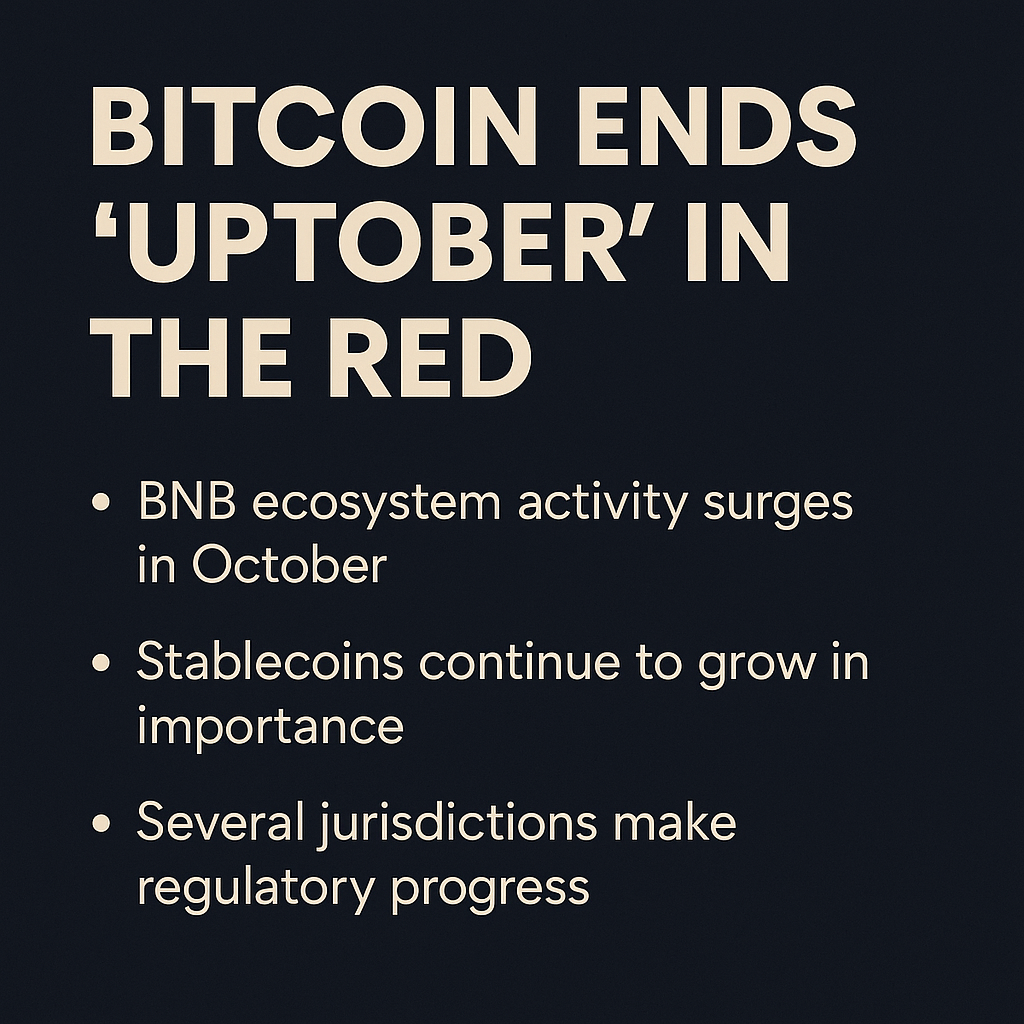
October delivered an unexpected turn for the cryptocurrency markets, as the once-reliable seasonal strength of Bitcoin widely dubbed “Uptober” failed to materialize this year. Meanwhile, the BNB ecosystem surged in activity, and broader regulatory and structural developments added further nuance to the month’s narrative.
For the past six years, Bitcoin has tended to finish October in positive territory, a pattern so consistent it became part of market lore. This year, however, Bitcoin ended the month roughly 10% in the red marking its first negative October finish in seven years. The break in this trend suggests that market expectations, rooted in historical seasonality, may no longer hold as firmly as they once did.
Several factors appear to have weighed on Bitcoin’s performance this month. Among them was a large-scale liquidation event nearly $20 billion in size that triggered a wave of downward pressure on the asset. And although the article mentions a trade-war context and central-bank rate cuts, traders should note that causality in crypto remains inherently complex: external macro events often amplify sentiment rather than directly drive price. One trader even flagged that when Bitcoin previously closed October red, November followed with a ~36.6% drop, suggesting caution rather than optimism. For an investor oriented toward trend-followers, the lesson is that seasonality can fade and relying solely on calendar effects may no longer suffice.
By contrast, the BNB Chain saw a dramatic increase in transaction volumes up around 135% in October according to on-chain analytics. A key driver was a flurry of memecoin issuance on the network: over 100,000 new traders purchased memecoins on 7 October, of which 70% were reportedly in profit at that point. The platform Four.meme became the dominant launcher of new tokens, overtaking another launcher, and illustrating how network-specific ecosystem shifts can create meaningful behavioural change.
The surge in BNB Chain activity also supported a modest price uptick in the BNB token itself, which broke above $1,300 on 13 October before retreating somewhat yet still ended the month up around 6.6%. This divergence Bitcoin sliding while BNB rallied slightly underscores the increasing fragmentation and idiosyncrasy within the crypto ecosystem: major coins may no longer move in lock-step.
Beyond markets, the regulatory and infrastructural environment advanced in October. In the European Union, the controversial “Chat Control” proposal which would mandate scanning of encrypted messages to detect child sexual abuse material continued to stall: twelve member states supported it, nine opposed, and six remained undecided, delaying the vote into December. In the United States, while federal activity on crypto bills remains gridlocked, four states progressed their own legislation. For instance, Florida introduced a bill to allow state funds to invest in digital assets and set rules for crypto kiosks and stable-coin issuers; Wisconsin moved to close tax-exempt loopholes for crypto-mining data centres; New York pushed an excise tax on electricity for proof-of-work mining; and Massachusetts updated fiduciary rights around crypto.
Finally, adoption of stable-coins continues its steady rise: total market capitalization of the stable-coin market exceeded $300 billion in October. Notable structural developments include the launch of EURAU (a euro-backed stable-coin) by Deutsche Bank and asset-manager DWS Group, expansion of crypto services by the neobank Revolut (enabling 1:1 conversions between dollars and stable-coins), and the reported intention of Indonesia’s central bank to issue a national stable-coin. Meanwhile the payment giant Visa announced support for four stable-coins across four blockchains, convertible into 25 + fiat currencies.
In sum: October defied expectations for Bitcoin yet highlighted vibrant shifts elsewhere in crypto the BNB ecosystem’s surge, stable-coins’ growing significance, and regulatory momentum at national and sub-national levels. For market participants especially you, given your interest in crypto-friendly banking and transfer logistics these patterns underscore the importance of diversification and ecosystem awareness over reliance on calendar-based seasonality. If you intend to adjust strategy heading into November, it may be less about “Bitcoin always goes up in October” and more about identifying which protocols, tokens, and regulatory themes will drive activity next.