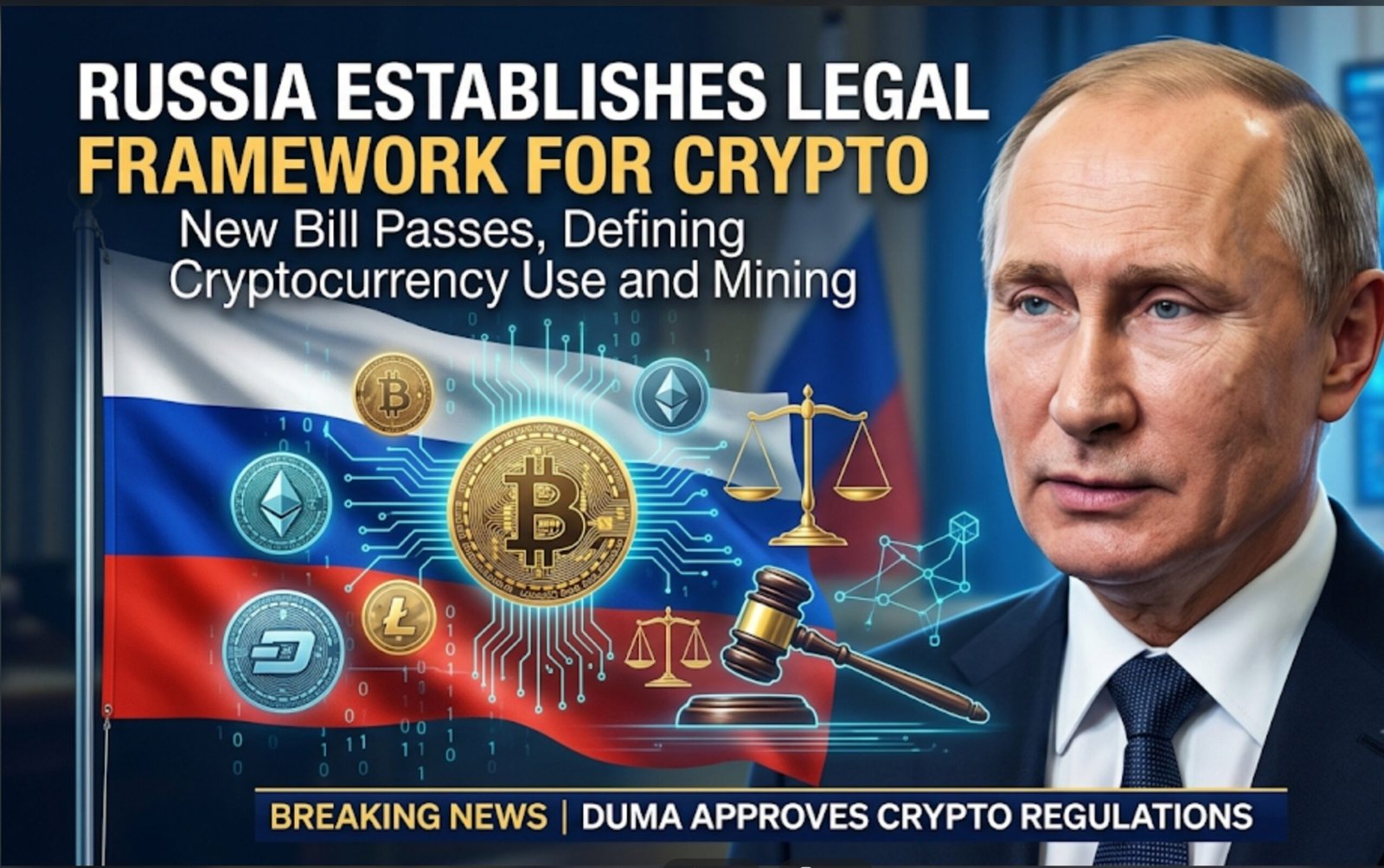
Russia has taken another significant step in shaping its digital asset industry after lawmakers approved legislation establishing a legal framework for cryptocurrency activities. The move provides greater regulatory clarity for businesses and investors while reflecting the country’s cautious approach to integrating digital assets into its financial system.
Although the legislation is viewed as a positive development for the crypto sector, its long-term impact will depend on how regulators implement the rules and whether the framework encourages innovation without placing excessive restrictions on participants.
Greater Legal Certainty
One of the biggest challenges facing the cryptocurrency industry globally has been regulatory uncertainty. Clear legislation can reduce legal ambiguity, allowing companies to better understand their obligations regarding licensing, reporting, taxation, and compliance.
For crypto businesses, regulatory clarity can make it easier to:
Plan long-term operations.
Attract institutional investment.
Build partnerships with traditional financial institutions.
Improve consumer confidence.
A well-defined legal framework may also help reduce fraud by requiring companies to meet minimum compliance and transparency standards.
Potential Benefits for Russia’s Crypto Industry
The new framework could encourage the development of domestic blockchain companies by providing a more predictable operating environment.
Institutional investors and fintech firms often prefer jurisdictions where digital asset regulations are clearly defined rather than relying on uncertain enforcement or temporary guidance.
The legislation may also support innovation in blockchain technology while allowing regulators to monitor risks such as money laundering, terrorist financing, and consumer protection.
A Balanced Approach
Despite these potential advantages, regulation is not universally positive for every participant.
Some crypto users argue that increased regulation can reduce privacy, increase compliance costs, and create barriers for startups. Smaller firms may struggle with licensing requirements or reporting obligations that larger companies can more easily absorb.
The success of the framework will therefore depend on whether regulators strike an effective balance between protecting consumers and allowing innovation to flourish.
Global Trend Toward Regulation
Russia joins a growing list of jurisdictions moving toward comprehensive crypto regulation. Around the world, governments are increasingly seeking to provide legal certainty while addressing financial stability and security concerns.
Rather than banning digital assets outright, many countries are choosing to regulate the industry through licensing, anti-money laundering requirements, and oversight of crypto service providers.
This reflects a broader shift from uncertainty toward structured regulation as cryptocurrencies become more integrated into global financial markets.
Looking Ahead
Russia’s new legal framework represents another milestone in the global evolution of cryptocurrency regulation. If implemented effectively, it could provide businesses with greater certainty and encourage responsible growth within the country’s digital asset sector.
However, the true impact will only become clear once the detailed regulations are introduced and market participants begin operating under the new rules. As with similar legislation in other jurisdictions, success will likely depend on maintaining a balance between regulatory oversight and preserving the innovation that has driven the crypto industry forward.