
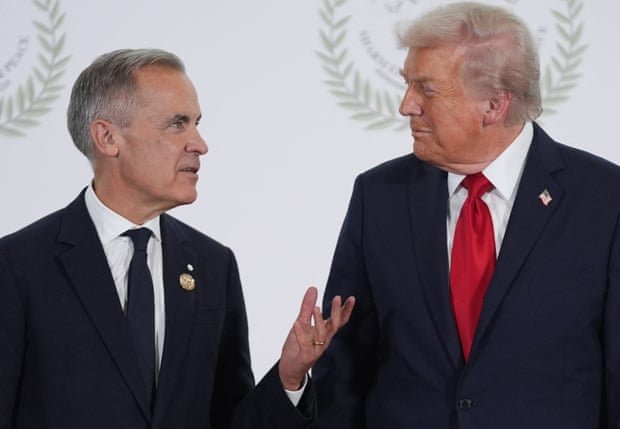
When the Donald Trump administration abruptly announced a halt to all trade talks with Canada, citing a provincial ad as the final straw, the ripple effects are already reaching the digital asset world. President Trump’s declaration that all trade negotiations with Canada are terminated after Ontario aired an anti tariff Reagan ad adds a fresh macro shock into already jittery markets. The core facts: the White House had already hiked U.S. tariffs on key Canadian exports this year and lifted some to 35% in August; now, talks are on ice, with Ottawa signaling it won’t accept “unfair” access and seeking diversification. Multiple outlets corroborate the rupture and the IMF has recently warned that trade tensions are a top risk catalyst for a disorderly market correction.
This development has several key implications for digital assets. Firstly, a “risk off” first order move is likely. Since 2020, Bitcoin and large cap crypto have tended to trade more like “risk assets” than hedges during macro shocks. The IMF and ECB analyses document materially higher BTC–equity correlations in stress regimes, meaning tariff driven growth scares can spill into crypto prices via the same de-risking that hits tech stocks. Secondly, U.S. dollar and CAD dynamics will be crucial. Trade wars usually nudge the dollar stronger on safe haven flows. In the 2018–19 episode, DXY rose around key tariff windows, and CAD carried a political risk premium. A weaker loonie versus USD can have two opposing crypto effects in Canada: it can pressure local crypto buyers as imported USD liquidity gets pricier, but it can also push some savers toward USD denominated stablecoins, as seen in other countries during currency stress. This leads to a third potential effect: a marginal upside for stablecoin demand. Whenever FX anxiety rises, demand for “digital dollars” tends to increase. Chainalysis has shown that in currency stressed markets, stablecoins take share of crypto volume. While Canada isn’t Argentina, a prolonged CAD slide and higher cross border frictions could nudge retail and SMEs toward USD stablecoins for invoicing, savings, or vendor payments, especially given Canada’s relatively high crypto penetration and regulated on ramps. Fourthly, the Canadian crypto industry and mining sector will be impacted. Canada hosts major listed miners and a maturing exchange stack. While policy friction doesn’t directly tax mining, risk off equity conditions can hit miner stocks’ financing conditions. Conversely, energy cost advantages, such as Quebec hydro, remain intact. The net effect is that fundamentals are unchanged, but capital market access could tighten if broader Canadian risk premia rise. Finally, ETF and fund flows may shift. If tensions between the US and Canada widen, US listed crypto ETFs could see larger relative inflows than Canadian wrappers simply because U.S. risk markets still dwarf Canada’s and the USD is the “flight to quality” currency. That said, correlations between digital asset ETFs and equities remain positive, so a global risk off day still weighs on both.
Looking ahead, several scenarios are worth watching over the next few days to weeks. One scenario is a sharp risk off move followed by a policy walk back; markets often sell first and negotiate later. If the White House tempers rhetoric or carves out exemptions, crypto could mean revert alongside equities. Another possibility is a prolonged tariff standoff. This would likely see a firm dollar and a soft CAD, with Canadian risk assets lagging. That setup historically pressures crypto in beta terms but can support stablecoin usage domestically. Participants should monitor the USDCAD exchange rate and retail stablecoin flows at Canadian platforms. A third scenario involves a spillover to other trade fronts. The administration is also tightening with other countries; a broader tariff regime raises recession odds and lifts cross asset correlations, which is usually bad for crypto beta in the short run.
These potential outcomes suggest several practical takeaways for crypto participants. Traders should expect higher realized volatility and equity style tape action, leaning on correlation hedges like NQ/ES around headline windows and widening stops on liquidity sensitive alt positions. Stablecoin users and treasurers in Canada should be aware that if FX risk rises, USD stablecoins may temporarily price at small CAD premiums on local venues. It would be prudent to manage conversion paths and on ramp capacity ahead of peak demand episodes. Lastly, miners and listed crypto firms should revisit cash buffers and credit lines. Tariff driven macro shocks mainly bite through equity multiples and financing, making operational moats like low cost power more important than ever.