
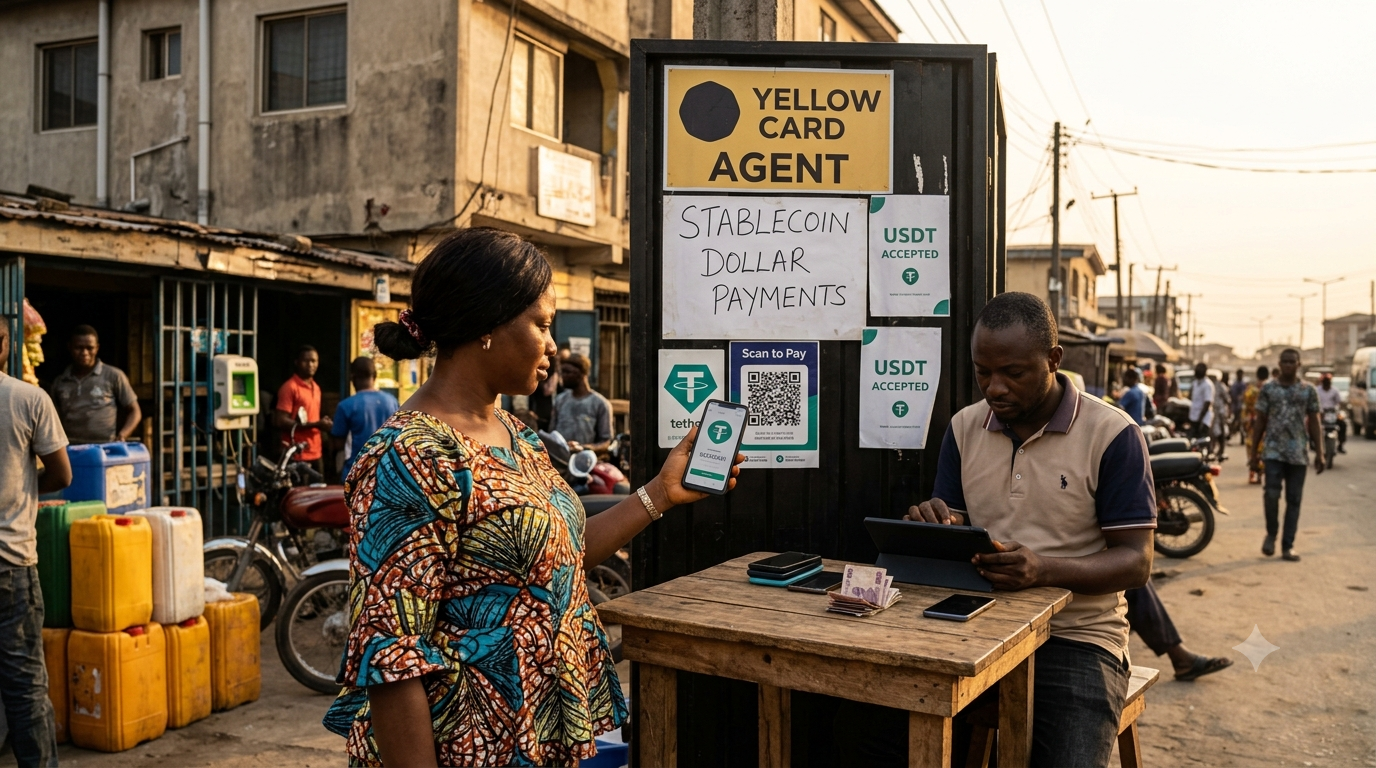
For years, the “de-dollarization” narrative has dominated macro headlines and crypto media alike. The story is familiar, cinematic, and compelling: BRICS nations building alternative trade cartels, central banks quietly hoarding physical gold, and local currency settlement systems gradually dismantling the post-1944 global financial order.
It is a great narrative. It is also fundamentally wrong about where the real structural shift is happening.
The actual pivot occurring across the Global South isn’t away from the US dollar. It is a mass migration into the dollar—just entirely outside the legacy banking apparatus.
Across the developing world, millions of citizens, small-business owners, supply-chain intermediaries, and even state-owned entities are adopting dollar-pegged stablecoins as their primary entry point into blockchain infrastructure. They are not doing this out of ideological alignment with Web3 or a desire to speculate on volatile tokens. They are doing it for basic financial survival.
Once this decentralized, dollarized infrastructure takes root in an economy, it creates a network effect that is almost impossible for state authorities to dismantle.
The Hard Numbers the Institutions Can No Longer Ignore
For years, institutional commentators dismissed stablecoins as speculative lubricants for offshore crypto casinos. That framing collapsed under the weight of empirical data.
The Bank for International Settlements (BIS)—traditionally among the most conservative monetary institutions in the world—released an Annual Economic Report documenting what it termed “stablecoin dollarization.” The central thesis was stark: stablecoins do not represent a new, decentralized monetary paradigm. They represent the old dollar hegemony running on modern, frictionless rails. Out of the global stablecoin market cap, over 99% remains explicitly pegged to the US dollar.
A subsequent BIS working paper studying over 130 economies underscored a reality that central bankers find deeply unnerving: traditional capital controls are failing. Historically, aggressive capital controls could suppress bank-level dollarization by up to 32 percentage points. Against permissionless stablecoins, those same controls demonstrated zero statistically significant effect on curbing inflows. The legacy regulatory toolkit has been rendered obsolete by public blockchains.
GLOBAL STABLECOIN MARKET BREAKDOWN
┌─────────────────────────────────────────────────────────────┐
│ USD-Pegged Stablecoins (USDT, USDC, etc.)           ~99.6%  │
├─────────────────────────────────────────────────────────────┤
│ Non-USD Stablecoins (EUR, CNH, Gold, etc.)          ~0.4%   │
└─────────────────────────────────────────────────────────────┘
Crucially, this is not a Western retail phenomenon. Roughly two-thirds of the global stablecoin supply is now held and actively transacted by users in emerging markets. The core user base isn’t quantitative trading desks in London or venture firms in Silicon Valley—it is everyday transactors in Lagos, Buenos Aires, Istanbul, and Manila.
The Adoption Playbook: Country-by-Country Ground Reality
Across emerging markets, the operational sequence follows a consistent pattern: local currency collapse triggers survival-driven adoption, and that adoption rapidly crystallizes into permanent commercial infrastructure.
Venezuela: From Black-Market Cash to State-Level Settlement
Venezuela represents the extreme end of this spectrum. Retail crypto activity surpassed an estimated $17.9 billion in a single quarter, with Tether (USDT) functioning as the de facto currency of record. On peer-to-peer platforms like Binance P2P, over 90% of active listings pair local bolívars directly against USDT. The stablecoin is no longer just a store of value; it is the primary unit of account for retail merchants.
The shift reached the sovereign level when state oil giant PDVSA began mandating that portions of international crude export settlements be executed in USDT to bypass traditional banking choke points. When a state-run energy exporter settles global trade in stablecoins, the technology has transitioned from a workaround to systemic architecture.
Argentina: Neobanks, Yield, and Hyper-Inflation Defense
Faced with annual inflation spiking past 200%, Argentina became an early testing ground for consumer stablecoin integration. Local fintech platforms like Lemon Cash and Belo integrated USDC and USDT directly into consumer spending apps, allowing users to hold dollar pegs right up to the moment of sale, converting to pesos instantly via QR code payments at local registers. Furthermore, regional neobanks began offering yield-bearing stablecoin accounts at rates that exposed local peso savings accounts as wealth destruction vehicles.
Turkey: The Lira Crisis and the Bottom-Up Policy Trap
In Turkey, where the lira lost over 450% of its purchasing power over a four-year span, nearly half the adult population has gained direct exposure to digital assets—primarily as a defensive hedge against domestic currency debasement. The response from Ankara is telling: the Turkish government’s draft digital asset legislation, heavily influenced by the European Union’s MiCA framework, is less an attempt to ban the asset class and more an effort to formalize and capture tax revenue from the very dollarized infrastructure its citizens built from the ground up.
Nigeria: Defying Bans via P2P Liquidity
When the Central Bank of Nigeria attempted to restrict crypto-related transactions through traditional banks, trade simply moved into robust P2P networks. Driven by a naira that lost roughly 70% of its value in less than two years, annual P2P volume topped $60 billion. Regional fintech facilitators like Yellow Card and Flutterwave built payment rails connecting local businesses directly to global dollar liquidity, bypassing the foreign exchange starvation plaguing domestic commercial banks.
The Philippines: Modernizing the Remittance Corridor
The Philippines demonstrates how stablecoins optimize healthy capital flows. With annual remittances exceeding $36 billion—accounting for more than 10% of national GDP—cost-sensitive corridors are adopting blockchain settlement. Local platforms like Coins.ph route cross-border transactions at a fraction of traditional banking fees, forcing legacy commercial banks to explore direct stablecoin integration to avoid losing market share.
Brazil: The Institutional Blueprint
Brazil stands out as an indicator of where this trend leads in stable economies. Brazil’s adoption isn’t driven by hyperinflation or currency collapse; the real has remained relatively stable compared to its regional peers. Yet, following progressive regulation, major banking institutions like Itaú and Nubank integrated crypto offerings directly into their apps. Brazil proves that stablecoin adoption isn’t just a crisis response—it is simply a superior technology for moving value.
The Reality Check: Why Non-Dollar Stablecoins Aren’t Catching Up
The persistent narrative that a multipolar world will create a multipolar stablecoin market is disproved by the data.
┌────────────────────────────────────────────────────────────────────────┐
│                        THE MARKET CAP GAP                              │
├────────────────────────────────────────────────────────────────────────┤
│ Dollar-Pegged Stablecoins:   ~$320,000,000,000                        │
│ Non-Dollar Stablecoins:      ~$1,200,000,000                          │
│                                                                        │
│ Non-USD pegs represent roughly 0.37% of the total stablecoin market.   │
└────────────────────────────────────────────────────────────────────────┘
Non-dollar stablecoins—whether pegged to the Euro, the Chinese Yuan, Gold, or local emerging market currencies—hold a combined market cap of roughly $1.2 billion. Compared to the ~$320 billion sitting in dollar pegs, non-dollar options are a rounding error.
STABLECOIN MARKET SHARE
===================================================================
[|||||||||||||||||||||||||||||||||||||||||||||||||||||||||||||||||] USD (99.6%)
[] Non-USD (0.4%)
===================================================================
When given the choice of any asset on earth via a permissionless smartphone interface, citizens in developing nations overwhelmingly choose the US dollar.
Research demonstrates that deposit dollarization and stablecoin inflows are driven by the same core economic catalysts: domestic currency instability, high exchange-rate pass-through, and mistrust in local monetary authority. Historical precedence shows that once an economy becomes dollarized, that transition is virtually irreversible. The friction of reverting to a weak local currency is simply too high for market participants to accept.
The Bottom Line: Dollar Hegemony on Faster Rails
The geopolitical implications of this shift are profound.
While diplomats sign symbolic agreements at summit tables to trade in bilateral local currencies, their citizens are downloading self-custody wallets and converting their weekly earnings into digital US dollars.
Every new P2P network, merchant integration, automated payroll system, and cross-border payment rail built in the Global South is cementing the dollar’s status as the global unit of account. The underlying interface may be decentralized, open-source, and cryptographically secured, but the economic unit flowing through the pipes is the American buck.
The United States didn’t need to launch a Central Bank Digital Currency (CBDC) or deploy aggressive trade diplomacy to defend its monetary dominant status against de-dollarization headlines. It simply needed open-source developers, global fintechs, and stablecoins to keep scaling.
The “de-dollarization” revolution didn’t dismantle the dollar. It gave it a upgraded, borderless operating system.