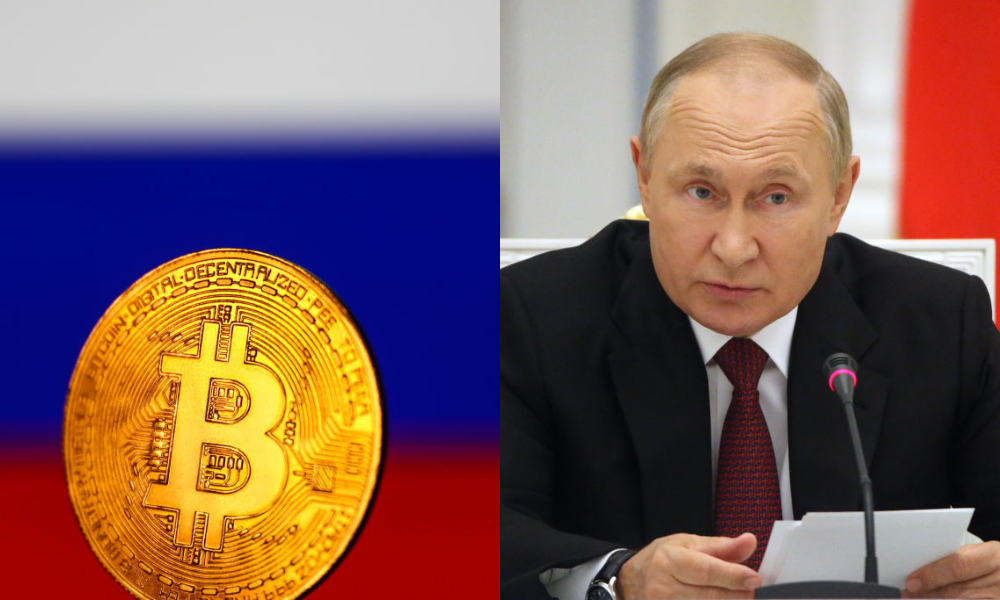
Right then. Let’s talk about Russia and crypto, because apparently the bear now wants a seat at the digital asset table, and I have thoughts.
So here’s the story making the rounds: Russian banks and major financial firms are deep in talks to expand their access to crypto markets. Sberbank, Alfa-Bank, VTB, T-Bank, the whole gang, all suddenly falling over themselves to build wallets, digital depositories and trading desks. And they want you to believe this is just “innovation.”
Give me a break.
Let’s get the facts straight, because facts matter, even in crypto Twitter land. Russia’s new digital asset law took effect on September 1, 2026, after Putin signed it back in August. Sberbank, the country’s biggest lender, reckons regulated crypto trading could hit 4 trillion rubles, that’s roughly $46 billion, in its first year alone. Alfa-Bank is building its own depository. VTB wants in. T-Bank’s parent is teaming up with the Atomize platform. Everyone, and I mean everyone, is racing to plant a flag before the gold rush starts.
Now, on the surface, this looks like Russia finally growing up on crypto. For years the Bank of Russia treated Bitcoin like radioactive waste, banning it, warning against it, lecturing citizens about the dangers of digital assets while quietly watching $10 billion of their own money pile up on exchanges anyway. Governor Elvira Nabiullina spent years playing the disapproving headmistress. Now she’s handing out hall passes.
But here’s where I get suspicious, and you should too.
This isn’t about financial freedom. This isn’t Moscow suddenly embracing decentralisation and open markets. This is a sanctioned economy looking for a side door. When you’ve been locked out of SWIFT, cut off from Western banking rails and squeezed by years of restrictions, crypto stops being a curiosity and starts being a lifeline. Digital financial assets in Russia are already a $13 billion market, built deliberately on private, domestic blockchains that Western regulators can’t touch. That’s not an accident. That’s architecture.
So when Sberbank talks about loans backed by Bitcoin, Ethereum and USDT, ask yourself the obvious question: who benefits from a Kremlin-approved crypto rail that sits outside the reach of Western sanctions enforcement? It’s not the average Russian saver. It’s the state.
And let’s be honest about something else too. Every crypto bro who’s spent the last decade shouting about decentralisation, about getting governments out of money, should be deeply uncomfortable watching one of the most centralised, state-controlled economies on earth co-opt the technology for its own strategic advantage. This is not what Satoshi had in mind.
Here’s my prediction. This won’t stay confined to “qualified investors” and “non-deliverable derivatives” for long. Once the infrastructure exists, once the depositories are built and the licensing pathways are simplified, the scope creeps. It always does. What starts as a cautious regulatory sandbox for the super-rich has a funny way of becoming state policy with teeth.
So welcome to the crypto market, Russia. Just don’t pretend this is about believing in the technology. It’s about believing in the workaround.
That’s Cointiculate. Straight talk, no spin.