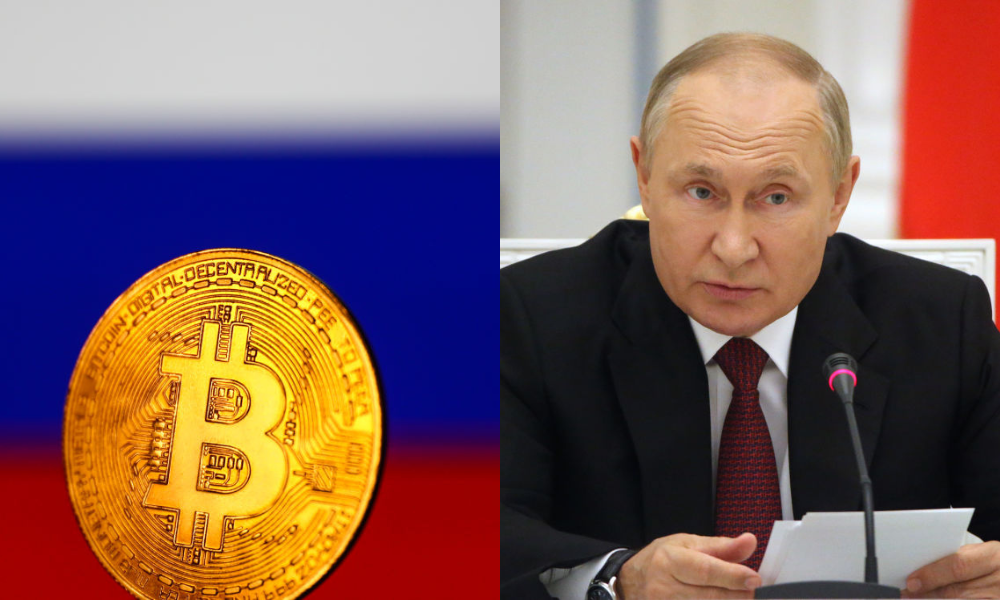
Russia Introduces First Comprehensive Crypto Law, Creating a New Legal Framework for Digital AssetsRussia has taken one of its most significant steps toward regulating the cryptocurrency industry after President Vladimir Putin signed the country’s first comprehensive crypto law, establishing clear rules for exchanges, custody providers, mining operations, and investor participation.The legislation marks a major shift from years of regulatory uncertainty, providing a structured legal framework for digital asset businesses while introducing safeguards designed to limit retail investor exposure.Retail Limits, Institutional FreedomUnder the new law, retail investors will be limited to 300,000 rubles (around $3,700) in cryptocurrency purchases per intermediary each year.However, the restrictions do not apply to accredited investors. Individuals and institutions that meet the government’s accreditation requirements will be able to invest in cryptocurrencies without annual purchase limits, creating a two-tier investment system.Supporters argue this approach balances innovation with consumer protection by limiting risk for less experienced investors while allowing sophisticated market participants to operate more freely.A Clearer Regulatory EnvironmentThe legislation establishes legal rules covering several key areas of the crypto ecosystem, including:Cryptocurrency exchanges.Digital asset custody services.Cryptocurrency mining.Investor eligibility and access.For businesses, the law provides long-awaited regulatory clarity that could encourage investment and operational growth within Russia’s digital asset sector.Why This MattersRussia has long been one of the world’s largest crypto mining hubs, thanks to its abundant energy resources and cold climate. Despite widespread crypto adoption, the country has historically lacked a unified legal framework governing much of the industry.The new legislation could help formalize the sector, provide greater certainty for businesses, and strengthen regulatory oversight.It also comes as countries around the world continue developing their own digital asset regulations. Rather than banning cryptocurrencies outright, many governments are increasingly choosing to regulate the industry through licensing requirements, investor protections, and compliance standards.Not a Fully Open MarketWhile the legislation is a milestone for Russia’s crypto industry, it does not represent unrestricted adoption.The annual purchase cap for retail investors reflects the government’s cautious approach, seeking to encourage innovation while limiting potential losses for everyday consumers.Whether the framework ultimately attracts greater institutional participation or slows retail adoption will depend on how the regulations are implemented and whether market participants view the new rules as supportive or overly restrictive.Final ThoughtsRussia’s first comprehensive cryptocurrency law represents a significant moment in the country’s approach to digital assets. By introducing legal certainty for exchanges, custody providers, miners, and investors, the government has moved the crypto industry further into the regulated financial system.The framework is unlikely to satisfy every participant, particularly retail investors facing annual purchase limits. However, it signals that Russia sees cryptocurrencies not as a passing trend, but as an asset class that requires formal regulation rather than outright prohibition.As implementation begins, the global crypto industry will be watching closely to see whether Russia’s regulatory model encourages growth while maintaining investor protection—or whether its restrictions ultimately limit broader adoption.

Crypto News,Defi Solana