
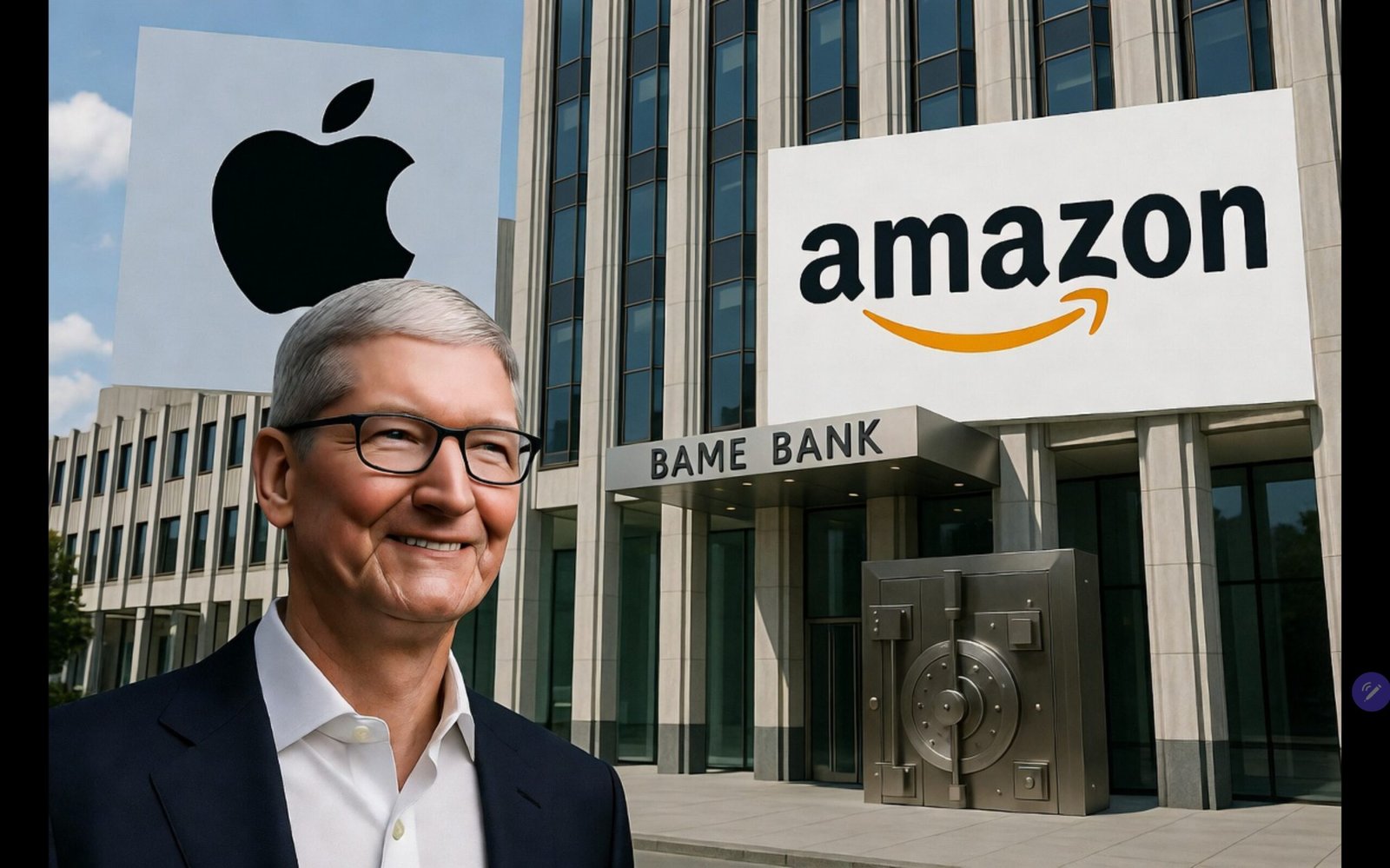
The Great Tariff Refund Paradox: How Big Tech Got a Windfall While Small Businesses Paid the Price
When the U.S. Supreme Court struck down emergency tariffs imposed under the International Emergency Economic Powers Act (IEEPA), it triggered an unprecedented government payout process estimated to return over $166 billion to importers.
However, as quarterly earnings reports roll in, a glaring divide has emerged: the trade policies designed to protect domestic commerce ultimately rewarded trillion-dollar tech giants while leaving small businesses and everyday consumers holding the bill.
The Corporate Cash Fall: Billions Returned to the Top
The scale of the government reimbursements to major corporations is immense:
Apple ($AAPL): Disclosed that it has received $2.19 billion in tariff refunds so far (out of an estimated $3.2 billion total paid). The reimbursement boosted its Q3 earnings per share by 5% ($0.11 per share) and expanded gross margins to a stunning 50.1%.
Amazon ($AMZN): Reported receiving $600 million in tariff refunds in Q2. CFO Brian Olsavsky noted that Amazon’s direct exposure was relatively small because the company pre-stocked inventory and operates primarily as a platform rather than the “importer of record” for 60%+ of its sellers.
For Big Tech, tariffs functioned almost like an involuntary, high-yield savings account. Having the capital to absorb costs or optimize supply chains allowed them to weather the storm, collect the eventual refund, and add billions back directly onto their balance sheets or into share buybacks.
The Small Business Reality: Absorption, Debt, and Bankruptcy
While Fortune 500 legal teams smoothly process Customs and Border Protection (CBP) refund applications, the story for small and mid-sized enterprises (SMEs) is drastically different.
Feature
Big Tech & Mega Retailers
Small Businesses & Consumers
Capital Buffer
Massive cash reserves to absorb import duties without immediate collapse.
Constrained cash flow; forced to take on high-interest loans to clear inventory.
Supply Chain Flex
Ability to preposition inventory, reroute logistics, or pressure suppliers.
Single-source suppliers with zero leverage to renegotiate trade terms.
Refund Recovery
In-house legal and trade compliance teams to file automated refund claims.
Prohibitive legal fees and complex customs bureaucracy prevent full recovery.
Ultimate Outcome
Multi-billion-dollar government payouts boosting stock valuations.
Sunk costs, lost market share, or permanent business closures.
Mega-corporations treated tariffs as a temporary margin pinch. For a small business operating on 5% margins, paying a 25% duty on imported components wasn’t a temporary pinch—it was a death sentence.”
3 Reasons Why the Wealth Disparity Widened
1. The “Importer of Record” Loophole
Amazon’s disclosure highlighted a key structural advantage: large platforms pass the trade burden onto third-party merchants. Over 60% of products sold on Amazon come from independent sellers who were forced to pay the tariffs out-of-pocket and raise retail prices to survive. When refunds are distributed, corporate platforms collect on their direct inventory, while small third-party sellers are left navigating complicated customs filings on their own.
2. The Legal and Bureaucratic Wall
Filing for customs duty drawbacks and IEEPA reimbursements requires specialized trade attorneys and detailed supply-chain auditing. While Apple can easily deploy teams to reclaim over $2 billion, a local hardware distributor or independent electronics shop often lacks the administrative capacity to prove historical tariff entries down to every line item, effectively forfeiting their legitimate refunds to the Treasury.
3. Consumers Pay Twice
When tariffs were enacted, retail prices rose across everyday consumer goods. Now that the tariffs have been declared unlawful, the money goes back to corporate treasuries, not consumer wallets.
Companies like Apple absorbed costs internally and are putting the money toward U.S. manufacturing investments and cash reserves.
Retailers who did raise consumer prices are under no legal obligation to issue retroactive checks to individual shoppers, except in rare, highly traceable instances.
Consumers paid higher prices at the register during the tariff period, and now their tax dollars are funding the multi-billion-dollar corporate reimbursements.
The Bottom Line
The post-tariff landscape demonstrates a recurring economic phenomenon: broad economic mandates often end up favoring the largest market players.
While public discourse framed tariffs as a tool to protect domestic industry, the execution and subsequent judicial rollback resulted in a massive transfer of wealth. Big Tech walked away with record margins and billion-dollar government checks, while small businesses absorbed the structural damage and consumers paid the ultimate price at the register.